Daniel Fine
Theatre Arts | Dance | Public Digital Arts
Tenure Dossier
3880: Installations and Interactive Performance
Develop new course offered for the first time in Spring of 2017
Cross-Listed:
Role:
Professor
Theatre Arts, Dance, Digital Arts
Semesters Taught:
S17, F17, F18, F19, S21
Prerequisites:
None
GE:
Engineering Be Creative
Description:
An introduction to the aesthetics, techniques and practical possibilities of fusing together theatre, dance, music/sound, art, design, cinema, gaming, human computer interaction, and engineering. Students will learn the foundations of creating interactive experiences that use digital photos, video, text, real-world objects, sensor data, live bodies moving in space, Kinect 2 sensors, cameras, and multiple video outputs such as projectors and LED displays. The interactive, node-based programming software Isadora, will be used to create immersive mediated performances, interactive installations, embodied user based experiences and user manipulated virtual environments.
Course Objectives:
- Understand the basic concepts, theories and practical applications of incorporating interactive digital media into installations, live performance and user based experiences.
- Develop applied knowledge of creating interactive media installations and live performance by designing and realizing projects in various analog, digital and new media.
- Cite and discuss historical and contemporary artists and companies.
- Work collaboratively across disciplines to investigate multimedia approaches to contemporary live experiences and new modes of storytelling.
- Develop skills in manipulating digital assets such as photos, videos, text, live video streams and data.
- Operate computer, video, projection, sensor, and camera equipment.
- Be able to perform basic-intermediate, node-based programming skills in Isadora.
- Develop the organizational and artistic skills necessary to successfully produce installations, interactive performance and user based experiences.
- Improve teamwork and communication skills.
- Critique and evaluate work.
Rationale for Creating this Course:
Part of five new courses that form the foundation in digital arts for live performance curriculum.
Offers students interdisciplinary collaborations that prompt them to research outside the traditional conventions of their respective disciplines in order to create artistic experiences that utilize technology for user based and interactive experiences.
Towards the Future:
This course uses a node based, visual programming language. There is potential for it to become an elective in Computer Science, Engineering and/or the Arts Cognitives in the CS Informatics major.
In Fall 2020, there is a TA for the course. In Spring 2021, the TA will teach a new undergraduate 2000 level version of the course to help fulfill demand from students. I will train and supervise the TA(s) so this popular course can be offered every semester to accommodate the demand. Beginning in Spring 2022, I will offer a new section of the course at the 5000 level so that graduate students may still enroll.
Enrollment Breakdown by Year/Semester:
-
Fall 2021 enrollment: 18 of 18 (11 grads, 7 undergrads)
- majors: Theatre Arts, Dance, Art, Informatics, Journalism and Mass Communication, Human Physiology
-
Spring 2021 enrollment: 12 of 12 (12 grads) note: class size reduced due to online teaching during Pandemic
- majors: Theatre Arts, Dance, Music
- Fall 2020: On Flex-Leave. Course not offered.
-
Fall 2019 enrollment: 17 of 18 (8 grads, 9 undergrads) waitlist (1 dropped after start of semester)
- majors: Theatre Arts, Dance, Art, Computer Science, Journalism and Mass Communication, Music, Cinema Arts
- Fall 2018 enrollment: 14 of 16 (4 grads, 10 undergrad) waitlist (4 dropped after start of semester)
- majors: Theatre Arts, Dance, Intermedia, Informatics, Biology, English, Cinema Arts, Engineering
- Fall 2017 enrollment: 10 of 18 (3 grads, 7 undergrads)
- majors: Dance, Theatre Arts, Marketing, Computer Science, Engineering, Art
- Spring 2017 enrollment: 12 of 14 (7 grads, 5 undergrads) (watilist, students dropped after start of semester)
- majors: Dance, Theatre Arts, English, Creative Writing, American Studies, Informatics, Engineering, Art
ICON:
ICON is an essential tool for all of my courses. You have been included as an observer in all of my ICON courses. On ICON you will find assignments, projects, rubrics, readings, etc. You have access to view this major teaching tool as seen by students per semester. You may be prompted to sign in using your Hawk ID and password.
Note: ICON sites from spring 2017 and earlier cannot be viewed by anyone without admin access. I cannot add observers or change the ICON visibility permissions for any ICON site from spring 2017 or earlier.
Link to: Fall 2021 ICON site
Link to: Spring 2021 ICON site
Link to: Fall 2019 ICON site
Link to: Fall 2018 ICON site
Link to: Fall 2017 ICON site
Links to Syllabi Per Semester:
Link to: Fall 2021 Syllabus
Link to: Spring 2021 Syllabus
Link to: Fall 2019 Syllabus
Link to: Fall 2018 Syllabus
Link to: Fall 2017 Syllabus
Link to: Spring 2017 Syllabus
Links to Course Evaluations Per Semester:
Link to: Spring 2021 Student Evaluations
Link to: Fall 2019 Student Evaluations
Link to: Fall 2018 Student Evaluations
Link to: Fall 2017 Student Evaluations
Link to: Spring 2017 Student Evaluations
Press:
During the course of the first semester the class was run, Iowa Now interviewed students and took photos. Iowa Now wrote and published an article on 10/25/17 that was featured on the main University homepage for about three months.
Samples of Student Work:
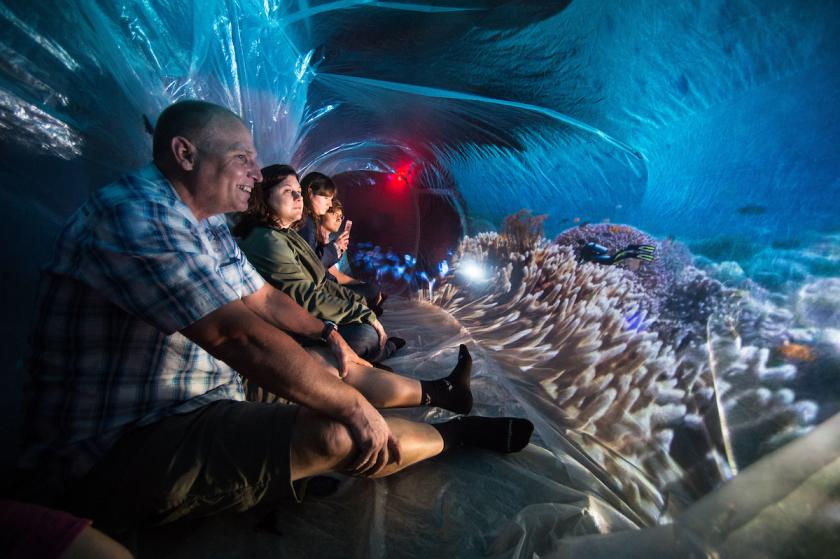



Audience inside projection mapped inflatable structure.
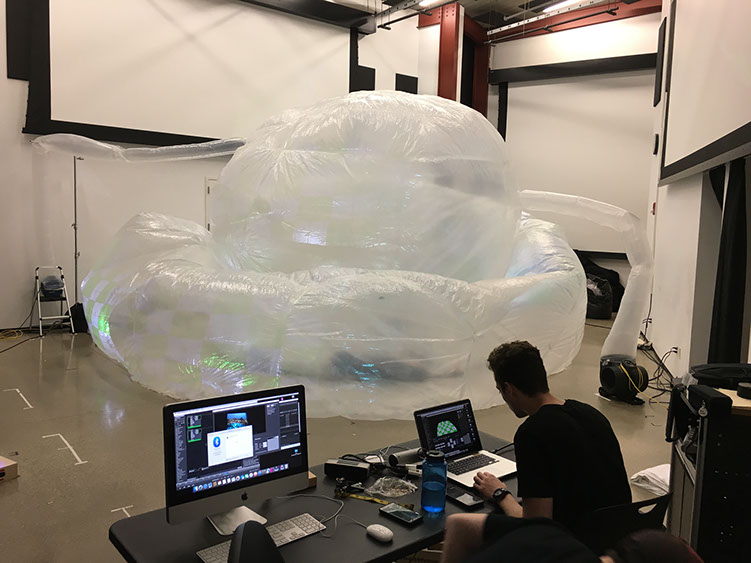
Student built inflatable structure for immersive final project. Student works to projection map the structure using Isadora.
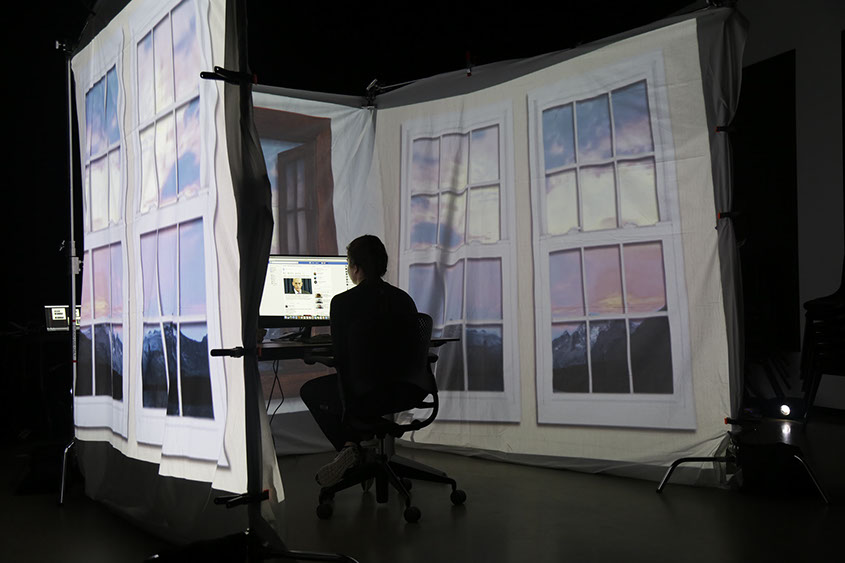
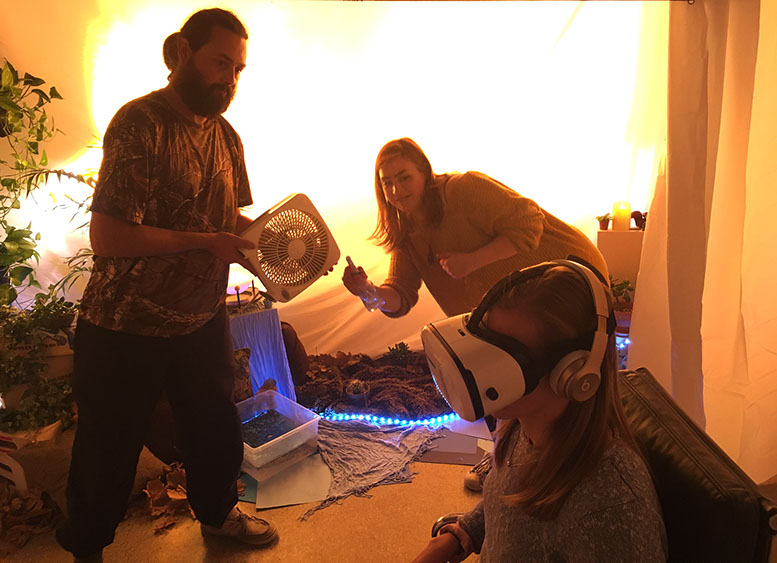
Immersive, interactive installation for one user at a time.
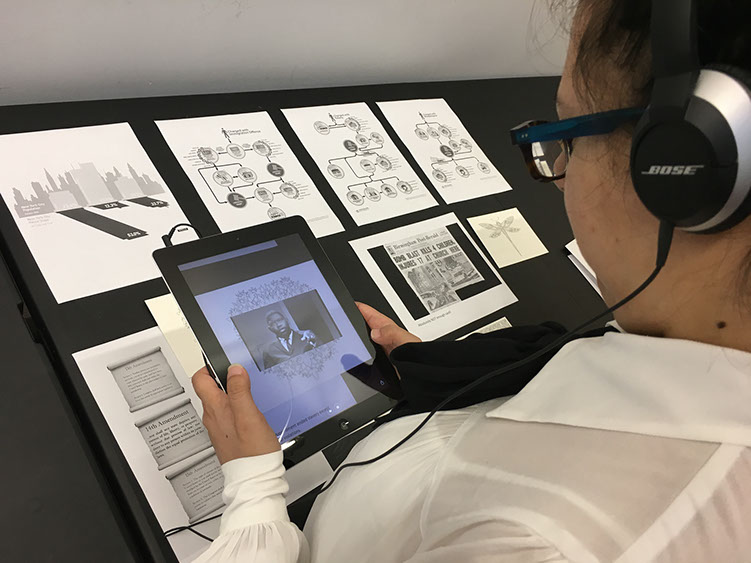
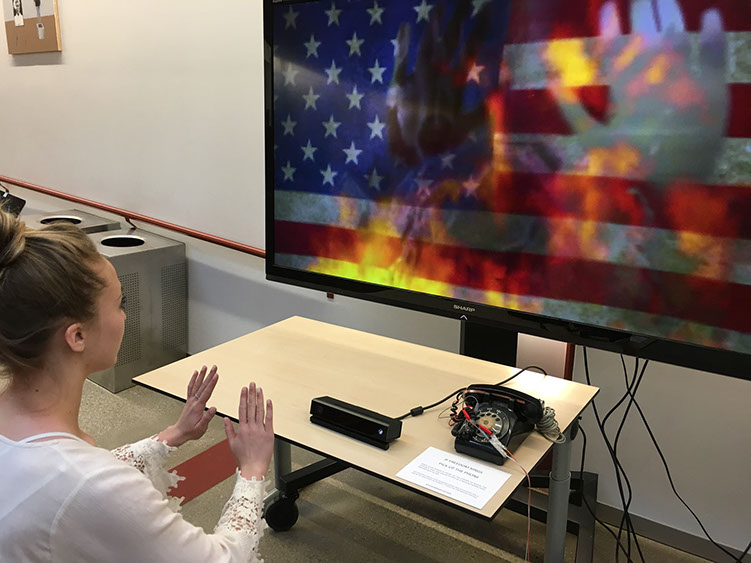
Interactive Installation for final project from a PhD candidate in American Studies.
Interactive Installation for final project from a PhD candidate in American Studies.
Kinect sensor allows user's body to alter the image of the flag. Audio plays from the phone.
Kinect sensor creates trigger zones for users to change the images based on their movement.
Mixed reality experience for final project.
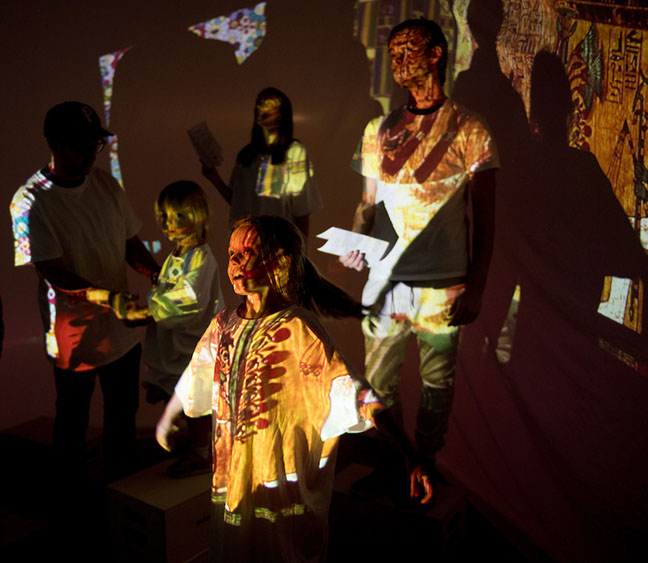
Audience member's movements trigger projections of artwork on their bodies.
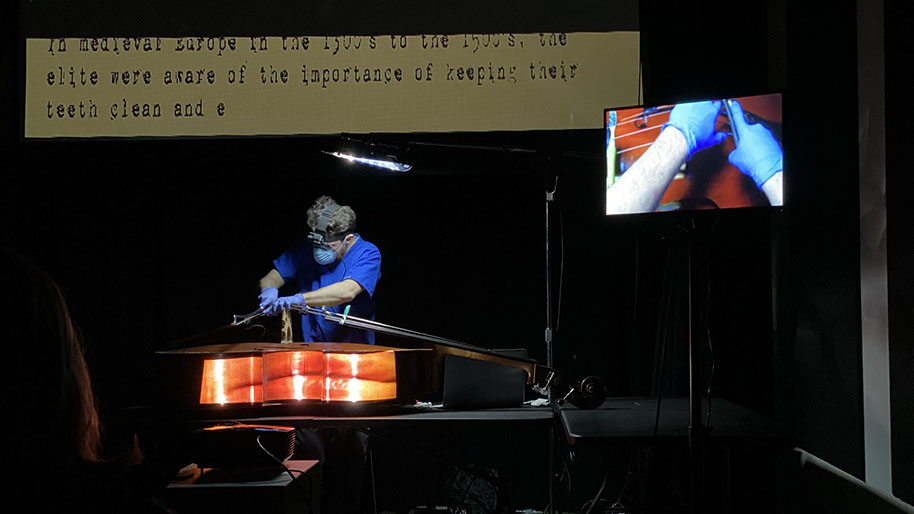
Performance, where bass player has a live-feed video camera mounted to his head.
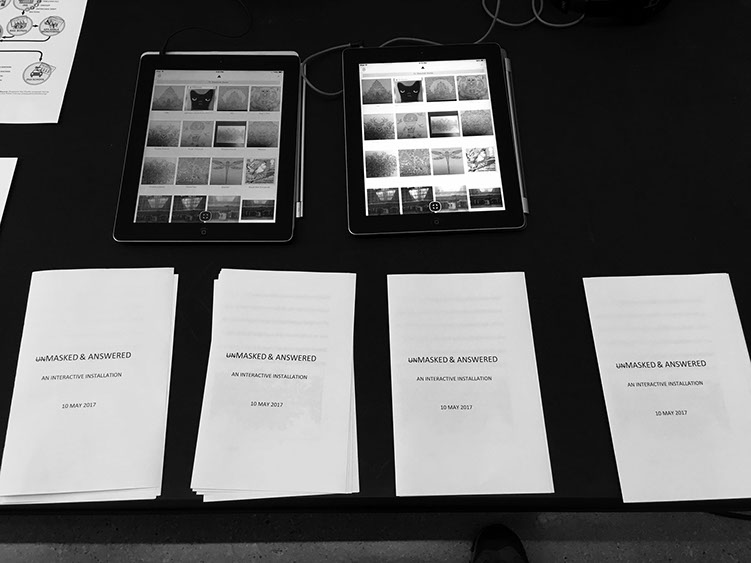
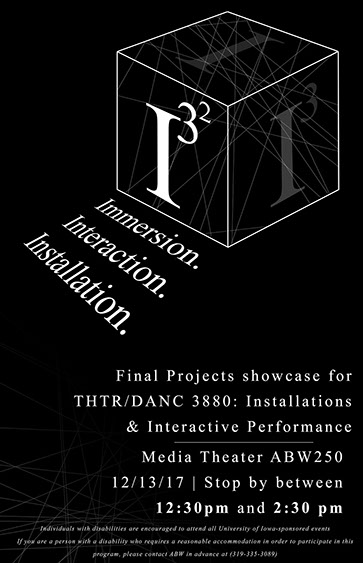
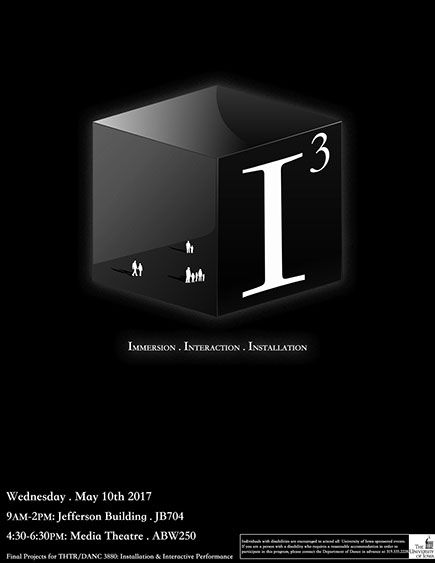
Student created flyer for public showing of final projects.
Student created flyer for public showing of final projects.
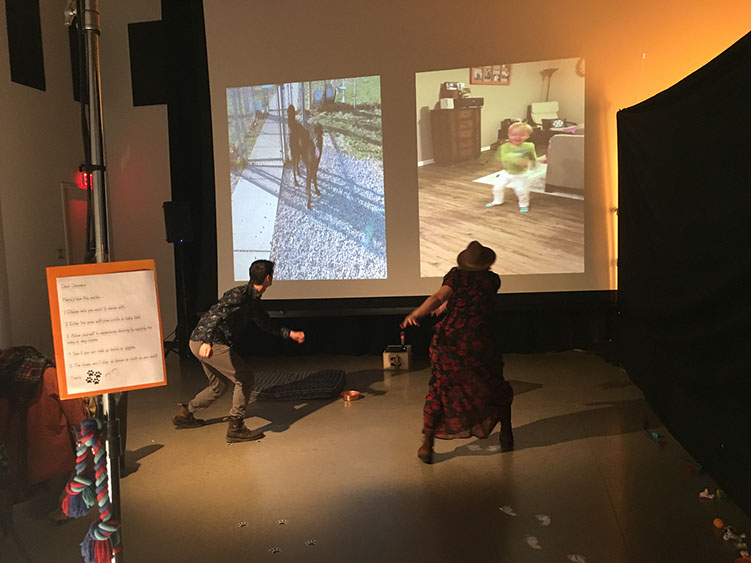
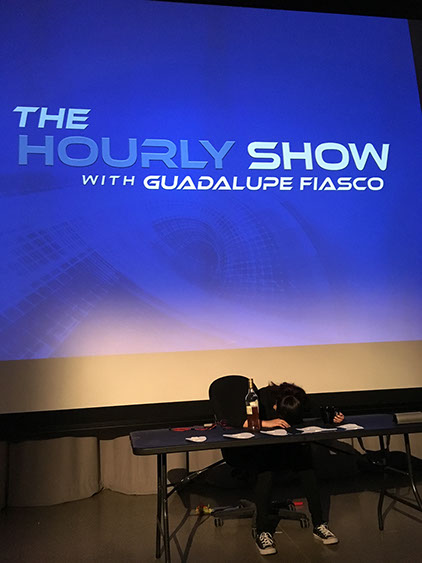
Interactive performance.
Interactive performance.
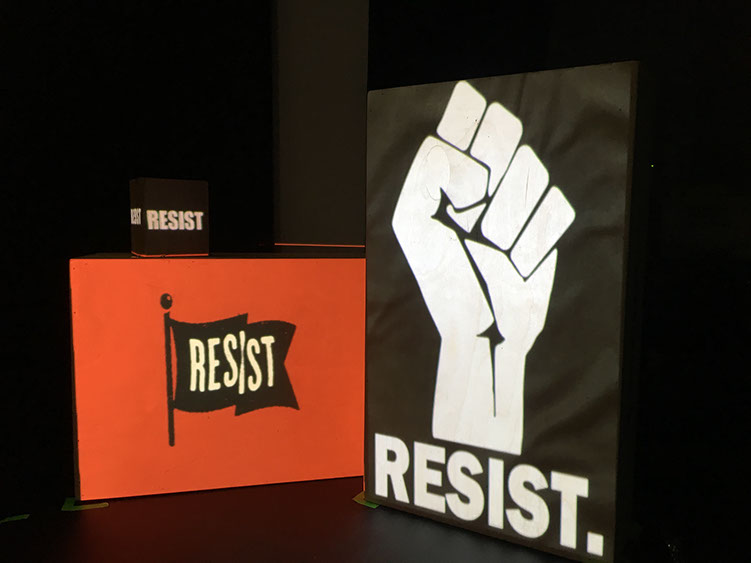
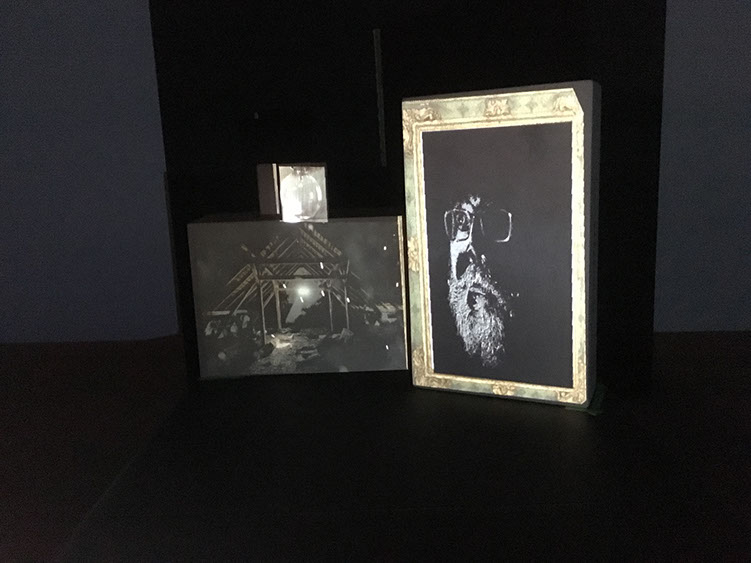
Isadora projection mapping project with visuals mapped onto boxes.
Isadora projection mapping project with visuals mapped onto boxes. A live video camera with effects is used.
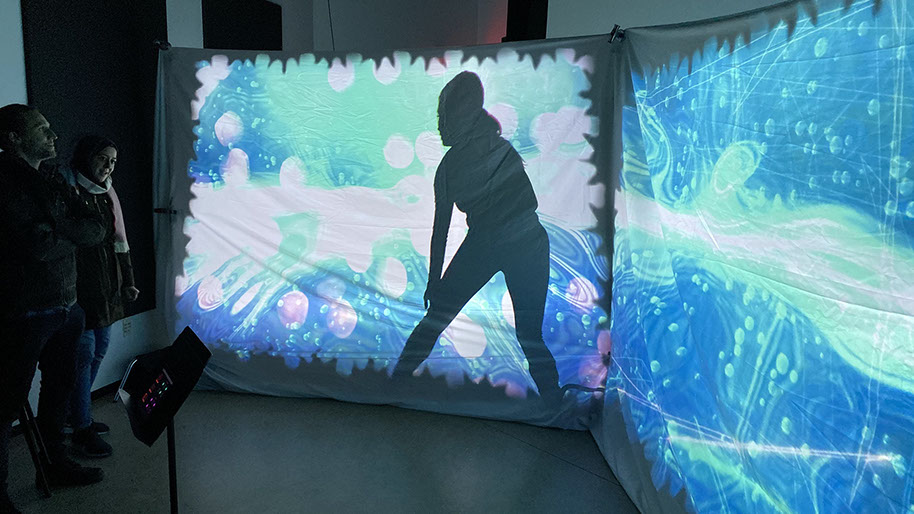
Shadow of a live performer in an immersive projection experience. Audience members controlled the music and background visuals.
17 - 17
<
>
Link to a student assignment video from online 2021 version of the class. Students used Isadora to create live, audio reactive performance that ported from Isadora to Zoom in real-time. For this performance grad students used Ableton Live in addition to Isadora. Skip to 2:00 in the video for the start of the performance.

copyright 2021